Understanding Blockchain Beyond Bitcoin
4 February 2026
When most people hear the word “blockchain,” their minds instantly jump to Bitcoin. And hey, who can blame them? Bitcoin brought blockchain into the limelight. But here's the truth — blockchain is much more than just the backbone of Bitcoin. It's a revolutionary technology that's quietly reshaping industries far beyond the world of crypto.
So, if you think blockchain begins and ends with Bitcoin, buckle up. We're about to unpack what's really behind this buzzword and why it’s more than just “magic internet money.”
What Even Is Blockchain, Really?
Alright, let’s keep it simple. Imagine a notebook that multiple people can write in, but no one can change what’s already been written. That’s blockchain in a nutshell.At its core, blockchain is a distributed ledger — a digital record of transactions or data that’s stored across many computers in a network. Once information is entered, it’s practically tamper-proof. Each new set of entries (called a block) is linked to the one before it — hence, a chain.
So, yeah, it’s just a fancy, secure, digital ledger... but don’t underestimate the power of that concept.
Breaking the Bitcoin Bubble: It's Not Just About Currency
Most people associate blockchain with cryptocurrency. And yes, Bitcoin runs on blockchain, but let’s zoom out a bit.Blockchain is like the internet. Bitcoin is like email — just one of its many applications.
So what else can blockchain do? So glad you asked.
1. Smart Contracts: Agreements With No Middleman
You know how when you rent an apartment, there’s a lease, maybe a lawyer, a bank transfer, and a whole lot of paperwork? Blockchain says, "Let’s simplify."Enter smart contracts — self-executing agreements with conditions directly written into code. When the conditions are met, the contract executes automatically. No need for a third party.
Let’s say you’re buying a digital art piece. A smart contract could release ownership to you as soon as your payment is confirmed. No escrow service, no lawyer, no fuss.
These contracts are:
- Transparent
- Immutable
- Fast & Efficient
Pretty cool, right?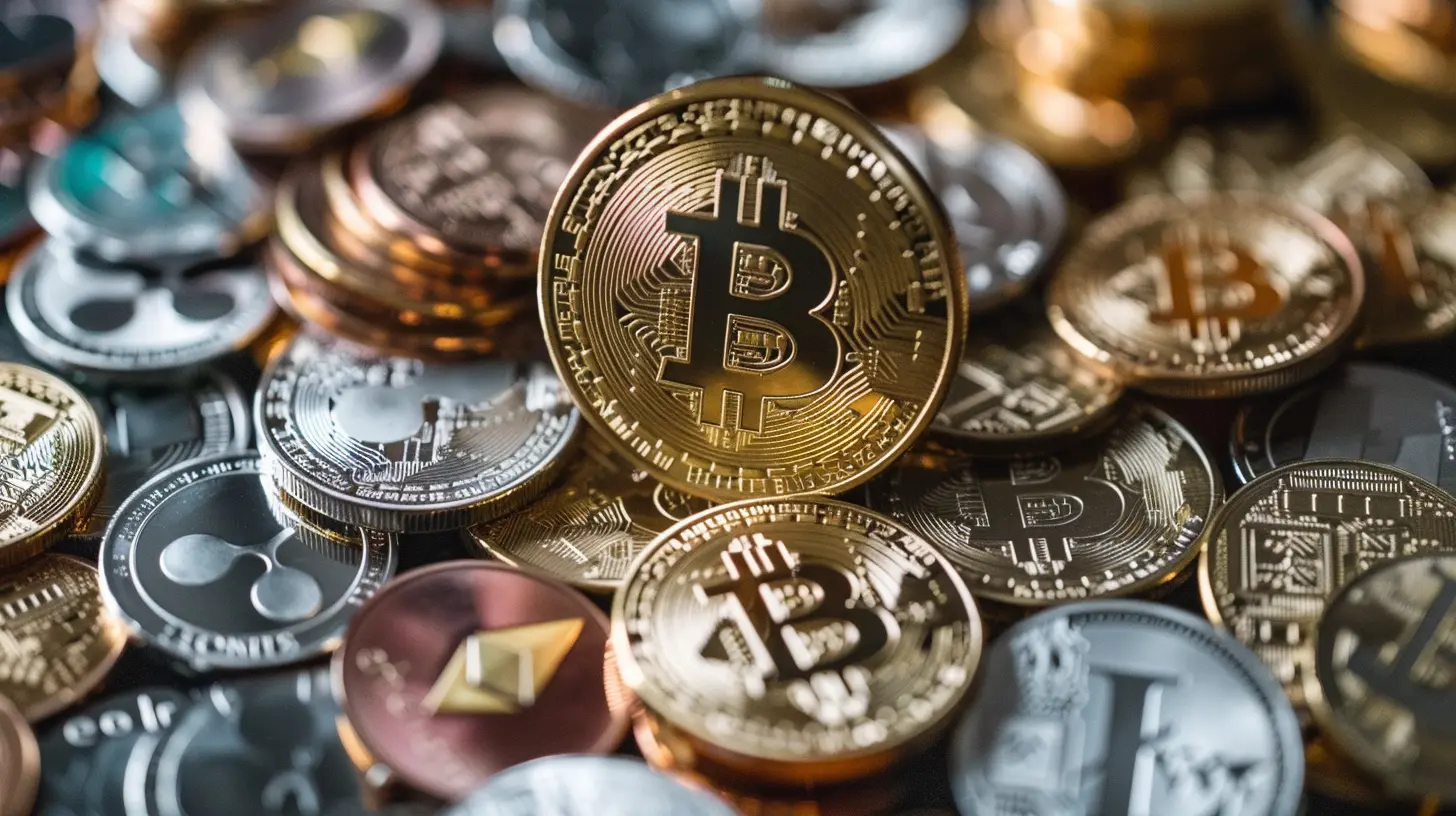
2. Supply Chain Management: From Factory to Fork
Ever wonder where your morning coffee came from? Blockchain can trace every step — from the coffee plantation to your cup.With blockchain, each touchpoint in a supply chain is logged and time-stamped. This means better transparency, fewer disputes, and tighter quality control.
For example:
- A supermarket can verify if its “organic” label is legit.
- A car manufacturer can track defective parts back to the source.
- A shipping company can reduce theft and loss by tracking movements in real-time.
It's like giving every product a passport that can’t be forged. 🌍
3. Healthcare: Your Medical Records, Finally Under Your Control
Raise your hand if you’ve ever filled out the same medical forms five times at different clinics. Yeah, same.With blockchain, your health data can be securely stored and easily shared between authorized providers — all while you stay in control. Your history is encrypted, tamper-proof, and accessible only with the right keys.
Benefits? Oh, just a few:
- Faster diagnosis
- Fewer test duplications
- More personalized care
Plus, in a world where data breaches are everywhere, blockchain adds much-needed security.
4. Voting Systems: Fighting Fraud, One Block at a Time
If trust in elections is shaky, blockchain just might be the answer.Blockchain-based voting platforms can provide:
- Tamper-proof results
- Transparent vote counting
- Verifiability without compromising voter privacy
Imagine voting from your phone, and knowing your vote can't be changed, duplicated, or lost. Not pie-in-the-sky—it’s already being piloted in some parts of the world.
Could this restore trust in democracy? It just might.
5. Digital Identity: Who Are You, Really?
Right now, your digital identity is scattered — your email here, your passport info there, your selfies... well, everywhere.Blockchain allows for decentralized digital identity. That means you own your data, and only you decide who sees it.
Think of it like a digital wallet for your identity. Need to prove your age? You can just show that you’re over 18 without handing over your birthdate or name.
This could kill off identity theft, reduce fraud, and give individuals more control online.
6. Real Estate: Say Goodbye to Paper Clutter
Buying a house is a paperwork nightmare. Titles, deeds, escrow, inspections — it's enough to make your head spin.Blockchain can:
- Store property records securely
- Enable fractional ownership (yes, you could own a slice of a building!)
- Make renting, buying, and selling faster and cheaper
Countries like Sweden and the UAE are already experimenting with blockchain-based land registries. The future? Paperless, painless, and proof-heavy.
7. Intellectual Property: Artists, Rejoice
Blockchain gives creators a way to protect their work with a digital timestamp. That painting, song, or poem — once entered into the blockchain — is officially yours.And with smart contracts, artists can get royalties automatically whenever their work is sold or reused.
Talk about flipping the script on outdated licensing models.
8. Decentralized Finance (DeFi): The Future Of Money?
Let’s not skip the financial side completely, because it's HUGE.DeFi uses blockchain to offer financial services — like lending, borrowing, and trading — without traditional banks. You become your own banker. 💰
Perks of DeFi include:
- Lower fees
- Greater access (especially in underbanked areas)
- 24/7 markets
It’s still a wild west out there, with risks galore, but the potential is enough to get Wall Street sweating.
What Makes Blockchain So Powerful?
It’s the combination of a few key traits:🔐 Immutability
Once something is recorded, it can’t be changed. This makes fraud incredibly difficult.🌍 Decentralization
No single authority controls the network. Power is distributed.📖 Transparency
Everyone on the network can see and verify transactions.⛓️ Cryptographic Security
Your data is locked tight with some of the world’s most advanced math.All these together make blockchain a game-changer. It builds trust in digital environments where trust is often hard to come by.
What’s The Catch?
Alright, it’s not all rainbows and unicorns. Here are some challenges blockchain still faces:- Scalability: Some blockchains slow down as they grow.
- Energy Consumption: Proof-of-work chains like Bitcoin still consume massive electricity.
- Regulation: Governments are trying to keep up, and not always gracefully.
- User Experience: It’s still kind of geeky for the average person.
But these hurdles? They're being tackled. Newer blockchains are faster, cleaner, and more user-friendly than ever.
Blockchain Beyond Hype: Real-World Adoption
This isn't just theory. Major companies and governments are already deep into blockchain:- IBM is working on supply chain solutions.
- Walmart tracks food safety using blockchain.
- Estonia runs national services like healthcare and identity on blockchain.
- Nike, Coca-Cola, and even JPMorgan are jumping on the bandwagon.
In short: this tech is maturing fast. And we haven’t even scratched the surface yet.
So, Why Should You Care?
You might not be buying cryptocurrency, building smart contracts, or launching a tech startup, but here’s the reality — blockchain is going to affect your life whether you like it or not.Sooner or later:
- Your next job application might be verified through blockchain.
- Your home purchase could be finalized with smart contracts.
- Your medical records may live on a secure, blockchain-based system.
Understanding how this technology works — beyond the Bitcoin hype — prepares you for a more digital, decentralized, and transparent future.
And who knows? You might even find some opportunities that others are too busy doubting to see.
Final Thoughts
Blockchain isn’t a buzzword — it’s a blueprint. One that’s already reshaping how we think about trust, ownership, and digital interaction.Yes, Bitcoin played the headline act in this story. But blockchain? It’s the unsung hero — quietly revolutionizing everything from how we vote to how we buy groceries.
So next time someone mentions blockchain, think broader than crypto. It’s not just digital gold — it’s digital infrastructure. And it’s already building your future.
all images in this post were generated using AI tools
Category:
CryptocurrencyAuthor:

Audrey Bellamy
Discussion
rate this article
2 comments
Carter Moses
This article effectively elucidates blockchain’s diverse applications, highlighting its potential to revolutionize various industries beyond cryptocurrency, fostering transparency and efficiency.
February 27, 2026 at 5:22 AM
Audrey Bellamy
Thank you for your insightful comment! I'm glad you found the article informative about blockchain's broader impact beyond cryptocurrency.
Zephyris Strickland
Blockchain technology extends far beyond Bitcoin, revolutionizing industries like finance, supply chain, and healthcare. Understanding its applications can unlock new opportunities for innovation and efficiency in various sectors.
February 10, 2026 at 3:26 AM
Audrey Bellamy
Thank you for highlighting the transformative potential of blockchain across various industries. It's crucial to explore these applications for innovation and efficiency.