What Investors Get Wrong About Diversification
17 October 2026
Diversification is one of the few free lunches in finance. It is also one of the most misunderstood concepts in the average investor's toolkit. Most people nod along when they hear the word. They repeat the old line about not putting all your eggs in one basket. Then they go out and build a portfolio that violates the spirit of diversification in ways they never notice.
This is not a knock on beginners. Experienced investors, including some professionals, fall into the same traps. The problem is that diversification gets taught as a slogan rather than a discipline. Once you treat it as a slogan, you stop thinking about what it actually does, when it stops working, and why the version you bought may not be the version you need.
Let's walk through the most common mistakes, the reasoning behind them, and what a more thoughtful approach looks like.

The Core Idea, Stated Properly
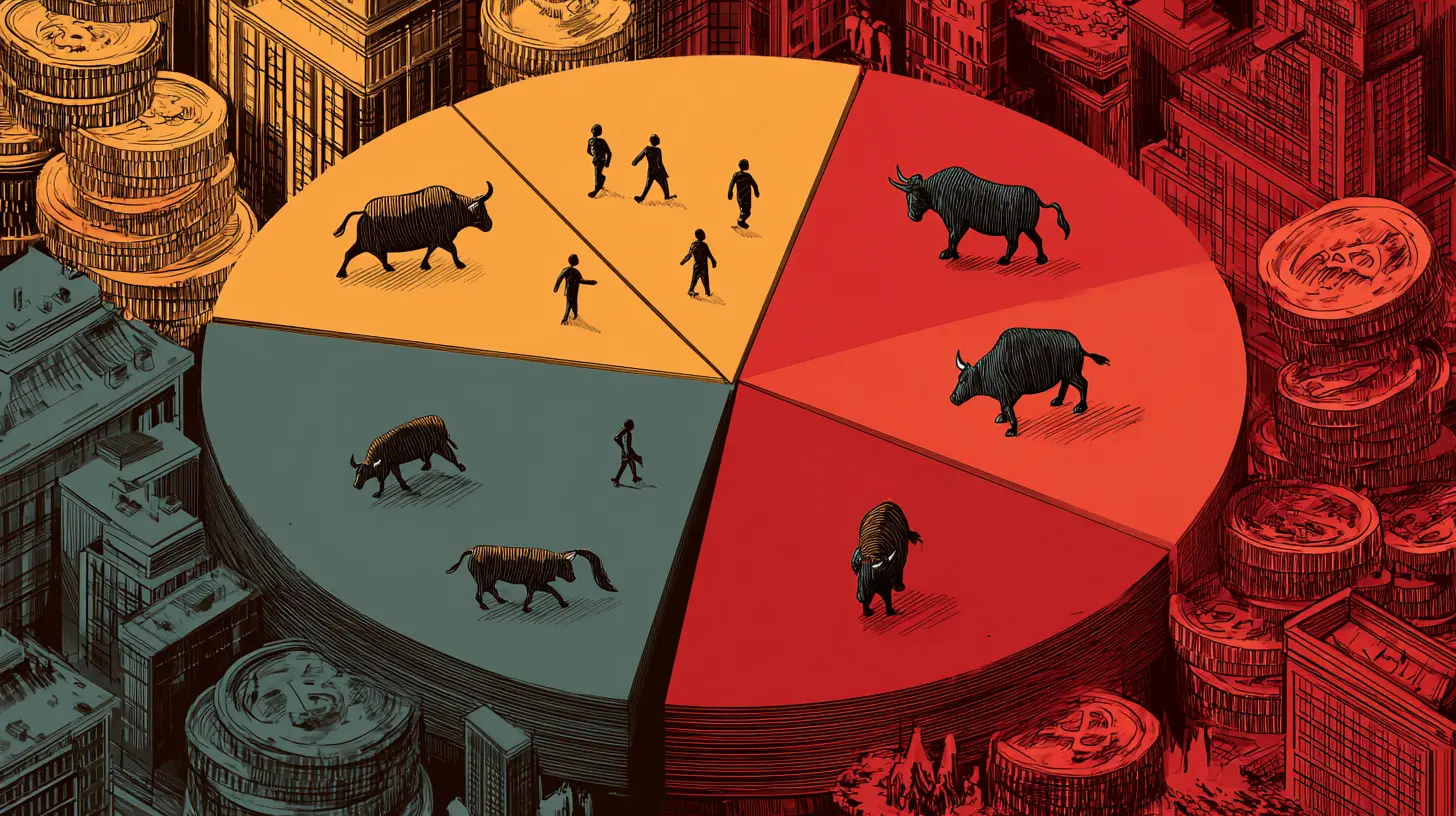
Diversification is not about owning many things. It is about owning things that do not all respond to the same forces in the same way at the same time. The number of holdings is a side effect, not the goal.Two portfolios can each hold 500 securities. One is genuinely diversified. The other is a concentrated bet wearing a disguise. If all 500 securities are large US technology companies, you own one economic exposure sliced 500 ways. When the market decides it no longer wants to pay a premium for that exposure, your "diversification" offers no protection.
The math behind this is not mysterious. When you combine assets whose returns are less than perfectly correlated, the volatility of the combined portfolio is lower than the weighted average of the individual volatilities. That is the whole trick. It does not require the assets to be negatively correlated. It only requires that they do not move in perfect lockstep.
The mistake is assuming that owning more tickers automatically lowers correlation. It usually does not. Correlations tend to rise during crises, which is precisely when you want them to stay low. That single fact undermines a lot of popular diversification advice.
Mistake One: Confusing Diversification With Diworsification
Peter Lynch popularized the term "diworsification" to describe the corporate habit of buying unrelated businesses and calling it strategy. The same disease infects individual portfolios.An investor holds a broad index fund, then adds a dividend fund, a growth fund, a value fund, a quality fund, and a low volatility fund. On paper, that looks diversified. In practice, those funds overlap heavily. The same 50 or 100 large companies appear in all of them. The investor has paid six expense ratios for roughly one exposure.
This is the overlap problem, and it is worse than most people realize. Two funds with different labels can share 60 or 70 percent of their holdings. You think you have six positions. You have one position and five receipts.
How to check for overlap
Pull the top ten holdings of each fund and compare them. If the same names keep appearing, you are not diversifying. You are stacking. A simpler test: ask what economic risk each fund is meant to hedge. If the answer is the same for two funds, one of them is redundant.
Mistake Two: Believing That Asset Class Labels Equal Different Risks
Labels are marketing. Risk factors are reality.Consider real estate investment trusts. Many investors treat them as a separate asset class that diversifies a stock portfolio. Sometimes that is true. But a REIT is a leveraged, rate sensitive, equity like instrument. When interest rates rise sharply, REITs often fall alongside long duration bonds and growth stocks. The label said real estate. The behavior said duration and leverage.
The same issue applies to commodities, gold, and certain alternatives. Gold has historically behaved differently from stocks, but it does not generate cash flow, so its price depends entirely on what someone else will pay. That can be a useful property in some environments and a frustrating one in others. Calling it a diversifier without understanding why it diversifies is how people end up disappointed.
A better question
Instead of asking "what asset class is this," ask "what does this asset need to happen in order to do well." If two holdings need the same thing, they are not diversifiers. They are the same bet with different names.
Mistake Three: Ignoring Correlation Regimes
Correlation is not a constant. It changes with the environment. In calm markets, many assets drift apart. In panics, they tend to converge. This is sometimes called correlation breakdown, though it is more accurately correlation convergence.During the 2008 financial crisis, correlations across most equity markets and credit markets spiked toward one. Assets that looked independent on a spreadsheet moved together when it mattered. Investors who had built portfolios based on calm period correlations found that their protection evaporated exactly when they needed it.
This does not mean diversification is useless. It means that the diversification you get from a mix of risky assets is weaker during systemic stress. To get protection during a true crisis, you often need something that is structurally different, such as high quality government bonds, cash, or assets whose value does not depend on the health of the financial system.
What this implies for portfolio design
Do not assume your diversifiers will hold up in a crisis. Test them. Look at how each holding behaved in 2008, in 2020, and in 2022. Past behavior does not guarantee future results, but it tells you what the asset is capable of.Mistake Four: Over Diversifying
There is a point where adding more holdings stops reducing risk and starts reducing returns. You end up owning the market at high cost with no conviction about anything.Research on portfolio concentration suggests that most of the benefit of diversification is captured with a surprisingly small number of holdings, provided those holdings are genuinely different. Beyond that, you are mostly adding complexity, transaction costs, and the illusion of safety.
The real cost of too many positions
When you own 80 or 100 individual positions, you cannot track them properly. You miss deteriorating fundamentals. You hold losers too long because they are a small part of the portfolio and easy to ignore. You dilute your best ideas until they no longer move the needle. And you spend more time on administration than on thinking.Index funds solve this problem elegantly for most people. But even with index funds, stacking six overlapping products is not diversification. It is just expensive redundancy.
Mistake Five: Assuming Diversification Means Safety
Diversification reduces idiosyncratic risk, the risk that comes from a single company, sector, or country blowing up. It does not eliminate market risk. A globally diversified equity portfolio can still fall 40 percent in a bad year. That is not a failure of diversification. That is what equity risk looks like.The confusion here is between two different goals. One goal is to avoid being wiped out by a single bad outcome. The other is to avoid losing money. Diversification helps with the first. It does not help with the second in any reliable way.
If you need to avoid losing money over a short horizon, the answer is not a more cleverly diversified stock portfolio. The answer is holding assets whose value is stable in nominal terms, such as short term government securities or insured deposits. Those have their own risks, chiefly inflation and opportunity cost, but they solve a different problem.
Mistake Six: Treating Home Country Bias as Harmless
Most investors overweight their home market. This is understandable. It feels safer to own what you know. It is also a concentrated bet on one country's legal system, currency, economic cycle, and political stability.For a US investor, a home heavy portfolio has worked well for a long time. That history can create a false sense of security. The US has been a strong market for decades, but that is not a law of nature. Japan in 1989 looked similarly invincible. So did emerging markets at various points.
The currency dimension
International diversification introduces currency risk, which cuts both ways. A weakening home currency can boost the returns of foreign holdings. A strengthening home currency can erode them. Some investors hedge this exposure. Others accept it as part of the package. Neither choice is obviously right. What matters is that you make the choice consciously rather than by accident.
Mistake Seven: Ignoring the Liability Side
Diversification is usually discussed in terms of assets. But a portfolio exists to fund something. That something is a liability, whether it is retirement spending, a house purchase, or a child's education.Two investors can hold identical portfolios and need completely different things from them. One has a stable salary, a pension, and no debt. The other runs a cyclical business, has variable income, and carries floating rate debt. The first can tolerate much more equity risk. The second may need more liquidity and stability, even if that means lower expected returns.
Diversifying assets without considering the rest of your balance sheet is like tuning a car engine without checking the brakes. The parts interact.
Practical implication
Before adding another fund, ask what it does for your overall financial position. Does it hedge your income risk. Does it provide liquidity when you need it. Does it match the timing of your goals. If the answer is no, it may not belong in your portfolio no matter how attractive its historical returns look.Mistake Eight: Chasing Diversifiers After They Have Performed
Investors tend to add asset classes after they have had a strong run. Commodities, gold, emerging markets, and various alternatives all follow this pattern. Money flows in after the returns, not before.This is a behavioral trap, not a diversification problem per se, but it destroys the benefit. The whole point of a diversifier is that it does something different. If you buy it after it has already done that something, you may be buying the top.
A disciplined approach rebalances. When one asset has run up, you trim it and add to the laggards. That is mechanically uncomfortable, which is why so few people do it consistently. But it is the mechanism that turns diversification from a static allocation into an actual risk management tool.
A More Useful Framework
Forget the labels. Think in terms of what drives returns and what can go wrong.Step one: Identify your dominant risk
Most portfolios have one exposure that dominates everything else. For many investors, it is the stock market. For some, it is their own industry, especially if they hold employer stock. For others, it is real estate, either directly or through a concentrated position.Name it. Write it down. Then ask what happens if that exposure has a bad decade.
Step two: Add exposures that respond to different conditions
If your dominant risk is equity beta, consider what does well when equities struggle. High quality bonds often do. So does cash. So can certain defensive sectors, though those are still equities and will not fully decouple.If your dominant risk is your home country, add international exposure. If it is your industry, reduce employer stock and diversify into broad market funds.
Step three: Decide how much protection you actually need
This is a personal question. It depends on your time horizon, your spending needs, your income stability, and your tolerance for drawdowns. There is no universal answer. A 25 year old with a stable job and decades until retirement can hold a very different portfolio than a 60 year old living off withdrawals.Step four: Accept the trade-offs
Every diversification decision involves giving up something. Adding bonds reduces expected return in most environments. Adding international exposure adds currency risk. Adding alternatives adds complexity and often fees. There is no free diversification. There is only a series of trade-offs that you either make deliberately or make by default.What Good Diversification Looks Like in Practice
A few principles tend to hold up.Own broad market index funds as your core. They are cheap, tax efficient, and genuinely diversified within their scope.
Add exposures that are structurally different, not just labeled differently. Global equities, high quality bonds, and cash cover a lot of ground for most people.
Keep it simple enough that you can explain it in a paragraph. If you cannot, you probably do not understand it well enough to hold it through a downturn.
Rebalance on a schedule or on bands. This forces you to sell what has done well and buy what has not. It is the opposite of what feels natural, which is why it works.
Review your total balance sheet, not just your brokerage account. Your job, your home, your debt, and your future spending all interact with your portfolio.
The Uncomfortable Truth
Diversification will never feel exciting. It will often feel like you are holding the wrong thing. When US stocks are ripping, your international allocation will look like a mistake. When growth is winning, your value tilt will look like a relic. When stocks are calm, your bonds will look like dead weight.That is the point. Diversification is insurance against not knowing which environment comes next. You pay for it in foregone upside during good times. You collect on it during bad times. If you never feel the cost, you probably are not diversified. You are just concentrated in whatever has been working.
The investors who get this right are not the ones with the most sophisticated portfolios. They are the ones who understand what each holding is for, accept the trade-offs, and stick with the plan when it is boring and when it hurts.
all images in this post were generated using AI tools
Category:
Diversification StrategyAuthor:

Audrey Bellamy